


From $2M to $5M: How Accountability Transformed a Roofing Business
Key Takeaways:
- Deliverables should be clear… and clearly owned
- Promote transparency by sharing the numbers with your team
- Make coaching intentional, but separate from accountability discussions
- Move business directions out of your head and into defined roles
Five years ago, Eric Schmerback’s company, Linkville Roofing & Siding, was stuck.
Revenue hovered between $2 and $2.4 million. Net profit sagged at 2–4%. The business depended heavily on him to keep everything moving. There was no functional org chart, no defined deliverables, and no clear accountability structure.
Today, the company operates at $5 million in revenue with net profit approaching 10%. Contracts are signed while he’s out of the office. Production runs without constant oversight. Sales, scheduling, and billing move forward because the right people own the right outcomes.
So what changed?
It wasn’t better roofing. It wasn’t longer hours.
It was accountability.
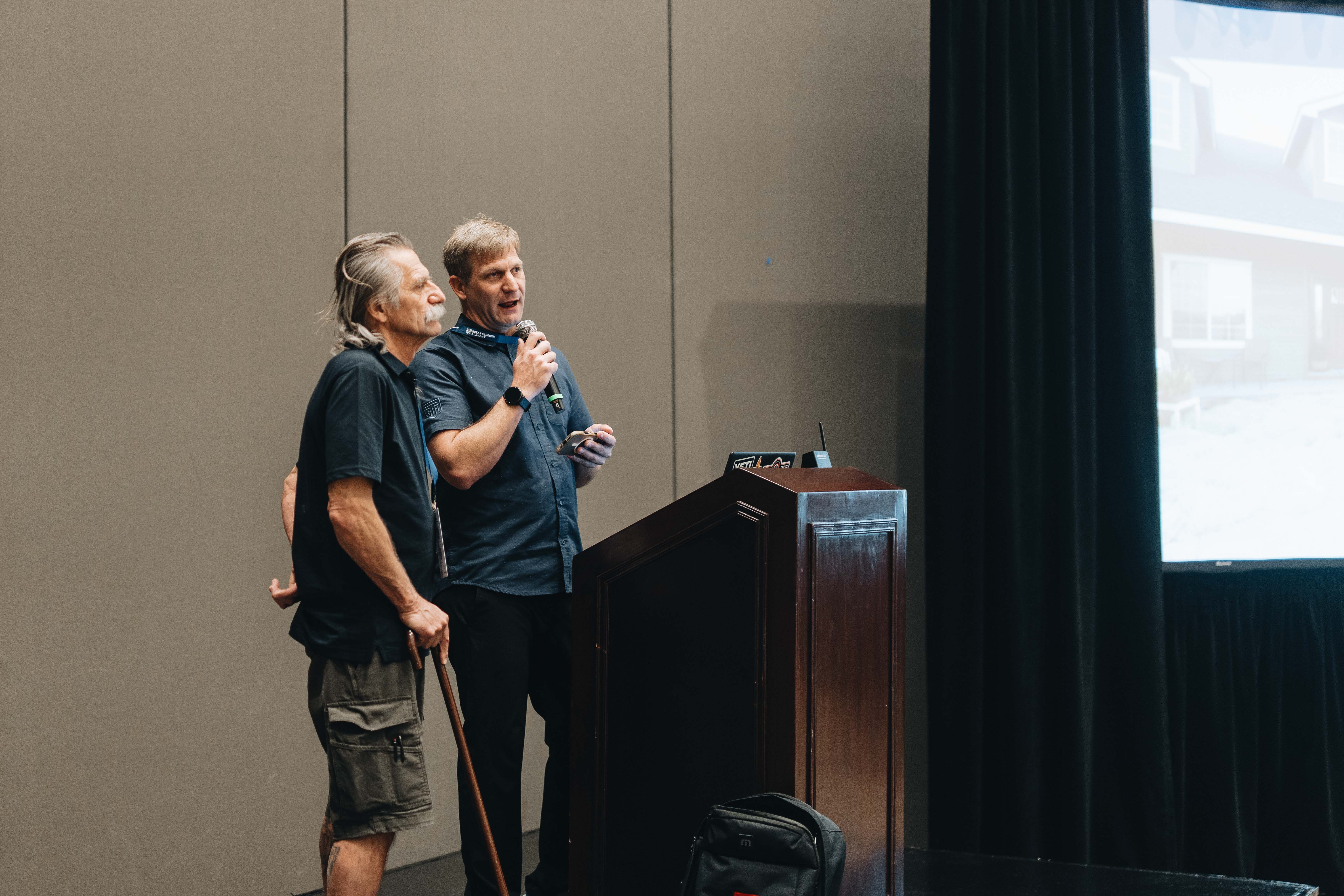
At the Breakthrough Academy Winter Summit, Eric shared what that transformation looked like—and how you can apply the same principles in your own roofing business.
Accountability starts with clarity
You can’t hold someone accountable to something that hasn’t been clearly defined. That was Eric’s first hard lesson.
Five years ago, everything flowed across his desk. Estimating, approvals, production decisions – if it mattered, it ran through him. Even though he was highly capable, it made him a bottleneck.
Until he made a pivotal realization: accountability must reside in roles, not in his head.
He started building a real org chart. Not a decorative one. A functional one designed to drive performance.
It included:
- Clearly defined roles
- Specific deliverables in each “bubble”
- Measurable outputs attached to every position
Those deliverables were then transferred directly into written job descriptions. Compensation was tied to results. If someone wanted to earn a certain income, there had to be a tangible output attached to it.
Clarity moved accountability from “I wish someone would handle this” to “You own this result.”
Separate roles before you scale
Structural separation came next.
Ownership responsibilities were divided clearly: sales on one side, production on the other. Drawing that line reduced chaos, because when roles are blended:
- Decisions get blurred
- Authority gets confused
- Accountability evaporates
It wasn’t seamless. There were disagreements and learning curves, but the separation created something the company had never had before: a structure capable of supporting growth.
You can hear more about how Eric overcame those obstacles by watching the full Breakout Session.

Growth didn’t come from better roofing
Here’s the uncomfortable truth for many roofers: they don’t grow because they get better at roofing. They grow because they get better at running a business.
In Eric’s case, that meant:
- Defining deliverables
- Measuring performance
- Reviewing results
- Having hard conversations
The real accelerator was implementing structured GSRs (Goal-Setting and Review meetings), a proven accountability system developed by Breakthrough Academy.
The first two years weren’t explosive. In fact, revenue barely moved while the system was being built. But in year three and four, something shifted. Revenue climbed. Net profit followed.
GSRs: Where accountability lives
A properly run GSR isn’t a coaching session. It’s a scoreboard. And that distinction matters.
Each deliverable must tie to a clear number. The result must be a hit or a miss. There must be zero ambiguity.
For sales, that meant:
- Revenue targets
- Closing percentages
- Defined activity metrics
For production:
- Hours produced
- Budget vs. actual performance
- Job profitability metrics
If the goal isn’t measurable, it doesn’t belong in a GSR.
One of Eric’s biggest early mistakes was allowing GSRs to turn into emotional coaching sessions. Coaching has a place, but not here. GSRs exist to review the numbers, identify the gaps, and set the next targets.
Once this rhythm was established, difficult conversations became dramatically easier.
Why?
Because everyone already knew the score.
When someone misses four cycles in a row, the writing is on the wall. Termination or seat changes stop feeling personal and start feeling inevitable.
Accountability becomes objective.
Own the failure at the top
A painful OSHA violation reinforced another critical lesson for Eric. A lead team member was written up. Later, another violation occurred. He was terminated.
But stepping back Eric discovered a deeper issue. The breakdown didn’t begin with the crew member. It began with leadership.
The wrong person was managing the crew. Oversight wasn’t structured correctly. Ineffective patterns had been tolerated for years.
It required a case of extreme ownership. If someone repeatedly fails under your leadership, the first question isn’t, “What’s wrong with them?”
It’s: “What did we allow?”
Accountability must flow down the org chart — starting at the top. Leaders set the standard. Leaders enforce it.
The scorecard changes everything
For years, it felt to Eric like the business was driving blind. That changed when financial scorecards were implemented consistently.
Those tools allowed the company to:
- Break out revenue streams (roofing, siding, painting, decking, commercial vs. residential)
- Track profitability by job
- Track profitability by salesperson
- Track performance by production manager
- Monitor crew-level performance
- Tie compensation to real job results
Every job was costed and salespeople had to complete job costing before earning commission. That requirement alone increased ownership and attention to detail.
When you can see budgeted labor versus actual labor, budgeted materials versus actual materials, and gross margin by job type, you stop guessing. And you start leading.
The company didn’t reach nearly 10% net profit by chance. It happened because Eric learned which levers to pull and when.
Learn more about how he did it by watching the full Breakout Session.
Involve the team in the plan
Early on, plans were determined by Eric. But being the sole driver created resistance and the feeling of dragging people forward.
These days:
- Budgets are rolled out to the team
- Plans are discussed openly
- Buy-in is earned
When the plan becomes “ours” instead of “mine,” execution accelerates.
Weekly team huddles reinforce this alignment. Every Monday at 8:30 a.m., leadership reviews high-level metrics, such as:
- Sales performance
- Production status
- Lead flow
- Operational bottlenecks
There’s no guessing and no hiding. Everyone sees the scoreboard. Because transparency strengthens accountability.
Coaching can’t be skipped
Along the way, a powerful leadership insight emerged: most owners skip steps. They move from instruction straight to delegation.
“Here’s the task. Go.”
Then frustration sets in when the outcome isn’t what they expected. But there are two critical middle steps that tend to be forgotten:
- Coaching
- Supporting
High-level tasks require time in those middle zones. If you want A-players running your business, you must invest meaningful time into development — not just direction.
One of the secrets many elite roofters have learned is that delegation without support only leads to underperformance.
Celebrate wins before chasing the next target
After five years of disciplined implementation, Linkville hit $5 million in revenue.
For years, the focus had always been the next milestone. The next improvement. The next target. But eventually, Eric realized… you also have to celebrate.
If you hit your goal, acknowledge it. Take your team out. Mark the milestone.
🎉
Linkville Roofing didn’t transform because of a new product, a new market, or a lucky break. It happened because Eric prioritized clarity over chaos.
If you’re stuck at a revenue ceiling, don’t ask, “How do I sell more?”
Ask, “Where does accountability live in my business?”
Because once there’s clarity, accountability has a place to live. And profit inevitably follows.
If you’d like to hear more about how Eric built real accountability into his roofing business and turned structure into profit, watch the full Breakout Session today.


Get in touch today!
Table of Contents

Get in touch today!


The business coach that lives in your inbox



You’ve built something great. Let’s make it amazing.
Ready to take your business to the next level? Let's chat.
Curious how the program will work for YOU?
You have all the right pieces of the puzzle.
We’ve helped over 1,900 contractors just like you
You don’t need to build it by yourself.
The time is now.
Over 1,900 Contractors have built businesses they’re proud of with Breakthrough Academy.
Systemizing your business is a lot of work. NOT doing it is even more.
Systemizing your business is a lot of work. NOT doing it is even more.
If you’ve read this far, it's safe to say you’ve already tried a bunch of stuff.
